



12th
October
2026

The problem
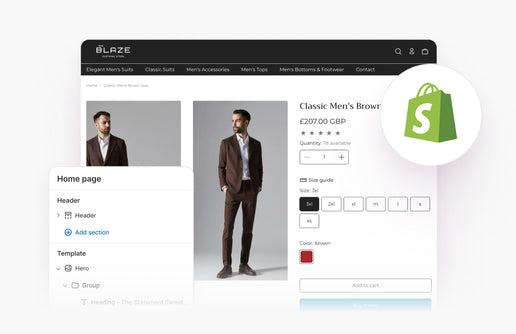
On a recent build for a cloth retailer, every fabric product held three kinds of variant: a custom length priced per centimetre, pre-cut sizes priced per piece and a sample. Shopify treats them as one price range. Ask for the product's "from" price and it returns the lowest price variant, which on cloth is the per-centimetre rate of a few pence. This does not account for minimum order quantity (MOQ) rules.
On a collection page, every product card then shows a price of a few pence. The figure is technically correct but commercially misleading. Customers click through expecting one price and find another, and every cloth card in the grid looks the same.

What we did
We changed how the card calculated the minimum product price. The card's price logic skips custom length and sample variants and takes the lowest viable price. Collection pages now show "From £2.75", the entry price the client confirmed for fabric.
The same rule runs through the rest of the journey. Stock messages on custom length convert centimetres to metres. In the cart, custom length and sample lines hide the quantity selector: a sample is a single swatch, and custom lengths are changed on the product page, where the minimum and the metre conversion apply. Customers also choose their fabric label before they can add cloth to the basket, so every order arrives with what the team needs to cut and pack it.
Why it matters for other product types
Variant pricing is a merchandising decision. Shopify's defaults assume every variant is a version of the same thing, sold in the same unit. Any store selling by weight, length or volume with a minimum order quantity or amount runs into the same price display problem: coffee priced by gram sold in minimums of 100g, rope priced per metre sold in minimums of 1m, paint priced per ml sold in minimums of 100ml.
The approach carries across. Decide which minimum price represents the product, price the card from that, and make stock messages, the cart and checkout use the unit the customer bought in.
Got products that don't fit Shopify's defaults? We design pricing, variant and cart logic around how your customers buy. Tell us about your project.
THE LATEST MARKETING INSIGHTS

